On Ear Headphones: Beginner Guide, Types, Fit Tips and Top Recommendations (2026)

On Ear Headphones: Beginner Guide, Types, Fit Tips and Top Recommendations (2026)
Updated: December 24, 2025
Last checked: December 24, 2025 (core specs, availability signals, buyer pain points, common confusion keywords)
Not affiliated: This guide is independent and not sponsored by any brand. Model availability and pricing can change quickly.
On ear headphones usually mean your ear pads sit on top of your ears instead of wrapping around them. That makes on ear headphones lighter and easier to carry than many over ear models, but also more sensitive to comfort, clamp pressure, and pad quality.
Fast definition: On ear headphones (supra-aural) rest on your outer ear. They are usually more portable than over ear headphones, but the wrong clamp or pads can cause soreness after 30 to 60 minutes.
Fast rule: If comfort is your top priority, treat on ear headphones like a “fit first” purchase: return policy matters as much as sound.
On Ear Headphones TL;DR – pick the right type in 30 seconds
Most people buy on ear headphones for portability, quick calls, and casual listening. Most returns happen for one reason: the pads press the wrong part of the ear. Use the quick tables below, then skim the comfort checklist before you buy.
| Use case | Best type of on ear headphones | Prioritize | Avoid |
|---|---|---|---|
| Commute | Wireless on ear headphones with comfort-first pads (ANC if it seals well) | Comfort, foldability, stable connection | Hard clamp, stiff pads, no return window |
| Office calls | On ear headphones with a strong mic and multipoint | Mic clarity, easy device switching | Weak mic, unstable Bluetooth |
| Home music | Wired on ear headphones (best value if you do not need ANC) | Sound, comfort for long sessions | Thin pads you cannot replace |
| Gaming / low latency | Wired on ear headphones | Zero Bluetooth lag | Marketing-only “gaming mode” claims |
| Gym | Usually earbuds are better than on ear headphones | Stability, sweat resistance | Slippery pads, heat build-up |
| Category | Recommended on ear headphones | Why it fits most people | Watch out for |
|---|---|---|---|
| Best overall | Beats Solo 4 | Portable, simple, mainstream tuning | Clamp comfort varies by head size |
| Best for commuting | JBL Live 460NC | Value features, ANC helps with low rumble | Seal affects ANC more on on ear headphones |
| Best for calls | Pick a mic-first wireless on ear model in your budget | Calls are about mic tuning and stability | Do not assume “ANC” equals “great calls” |
| Best wired | Audio-Technica ATH-M60x | Reliable sound, no battery issues, low latency | Isolation still lower than many over ear models |
| Best budget | JBL Tune 520BT | Good value, simple wireless | Do not expect premium ANC or mic |
| Best clip-on | Koss KSC75 | Ultra-light comfort, open sound | Leaky sound, low isolation |
Prices move weekly: If a “best overall” pick jumps far above your budget, do not force it. A comfort-first alternative is usually smarter than overpaying for on ear headphones.
Method note: These picks are based on product specs, long-term buyer feedback themes, and consensus patterns from reputable review outlets. We do not claim lab testing on this page.
How we choose on ear headphones (short trust block)
What matters most for on ear headphones:
- Comfort and clamp first: on ear headphones fail when pressure points build fast.
- Mic second: for office calls and classes, voice pickup and stability beat “specs”.
- Isolation and ANC third: ANC can help, but seal still matters on on ear designs.
- Pad availability and warranty: replaceable pads extend the life of on ear headphones.
- Real-world scenarios: commute, office, home, and light carry in a bag.
Author: TechPlayForge Editorial Team
Main explanation – what are on ear headphones?
On ear headphones (also written as on-ear headphones) sit directly on your outer ear. If you see “headphones on ear” in a listing, it usually means the pads do not fully surround the ear like over ear headphones do.
People buy on ear headphones for a simple reason: they are often lighter, more portable, and easier to carry than many over ear models. On ear headphones can also feel less hot in warm climates because the pads are smaller.
The trade-off is that on ear headphones are more comfort-sensitive. Two people can buy the same on ear headphones and have opposite experiences because clamp force, ear shape, and glasses pressure points vary a lot.
On ear or over the ear headphones – which should you choose?
If you are deciding between on ear headphones and over ear headphones, start with comfort time. If you want to wear headphones for 2 to 4 hours without thinking about them, over ear is often safer. If you want portability and short sessions, on ear headphones can be perfect.
| Type | Comfort over 2+ hours | Isolation potential | Portability | Best for |
|---|---|---|---|---|
| On ear headphones | Varies a lot (clamp and pads decide) | Medium (seal dependent) | High | Commute, office, casual music |
| Over ear headphones | Usually best | High | Medium | Long sessions, travel, strong ANC |
| Earbuds | Good if tips fit | High with proper seal | Very high | Gym, pocket carry |
| Open-ear / bone conduction | Often good | Low (by design) | High | Outdoor awareness |
Types of on ear headphones (wired, wireless, ANC, open, clip-on)
Wired vs wireless on ear headphones
Wired on ear headphones are still the easiest way to get stable sound and zero latency. Wireless on ear headphones are for convenience, calls, and portability.
If you are leaning wired for value or you hate Bluetooth lag, use this guide:
Best wired headphones guide (2025)
ANC vs passive isolation on on-ear headphones
ANC can help on ear headphones, but it works best when the pads seal evenly. If your glasses or hair break the seal, on ear headphones can feel like their ANC is “weak” even when the electronics are fine.
Open vs closed on-ear headphones
Open designs leak sound and let noise in. Closed designs isolate more and are usually better for commuting. If you share a room, closed on ear headphones are the safer choice.
Clip on ear headphones
Clip on ear headphones are a separate sub-type that hooks around your ear. They are often very comfortable, but do not block noise and can leak sound. If you want isolation, clip on ear headphones are not the right tool.
Steps and examples – how to choose on ear headphones without regret
This is the system that beats generic lists. Use it in order. It works for any on-ear headphones, even if you are shopping on a marketplace with confusing names.
Step 1 – pick your scenario
| Scenario | Best on-ear headphones type | Prioritize | Avoid |
|---|---|---|---|
| Commute | Wireless on-ear headphones with comfort-first pads | Comfort, fold, stable Bluetooth | Painful clamp |
| Office calls | On-ear headphones with a strong mic | Mic clarity, multipoint | Weak mic / random brands |
| Home music | Wired on-ear headphones | Sound, comfort over time | Pads you cannot replace |
| Travel | On-ear headphones with ANC only if fit is good | Seal + comfort first | Buying for ANC alone |
| Gaming | Wired on-ear headphones | Low latency | Wireless delay promises |
Step 2 – run the comfort risk check
30-minute comfort test for on-ear headphones:
- Wear the ear headphones for 10 minutes. Note any hot spots on the ear cartilage.
- Wear for 30 minutes. Check heat build-up and clamp fatigue.
- Wear with glasses if you use them. Check pressure points and seal change.
- Walk around. If they slip, you will hate them on commute.
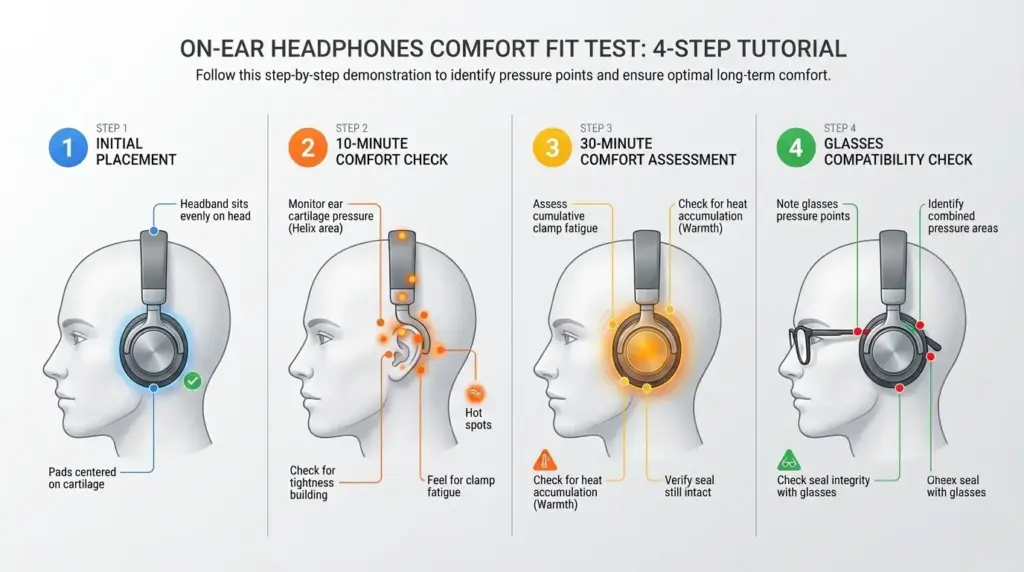
On-ear comfort checklist for glasses and small heads
This section is a ranking moat because comfort complaints are the most common regret with on-ear headphones. If you wear glasses or you have a small head, your comfort needs are different.
| Your situation | Prefer on ear headphones with | Avoid |
|---|---|---|
| Glasses wearer | Soft pads that compress evenly and moderate clamp | Hard clamp plus thin pads (hot spots) |
| Small head | Wide adjustment range and secure cup positioning | Loose fit that slips while walking |
| Sensitive ears | Softer pads and lighter clamp, or consider over ear | “Tight clamp for bass” designs |
| Hot climate | Breathable pads and breaks every 45 to 60 minutes | Thick non-breathable pads that trap heat |
Practical tip: If on-ear headphones hurt in the first 10 minutes, the problem is rarely “you need to break them in”. Comfort can improve slightly, but sharp hot spots usually stay sharp.
Pad replacement and long-term value (why it matters for on-ear headphones)
Pad replacement is the hidden difference between on-ear headphones that last years and on-ear headphones that feel bad after a few months. Pads flatten, harden, and crack. When pads change, comfort and bass change.
- How long pads last: It depends on heat, sweat, and usage. Heavy daily use can wear pads faster than casual use.
- Why replaceable pads matter: New pads can restore comfort and seal, which restores bass and isolation on on ear headphones.
- What to check before buying: Are official or third-party pads easy to find, and is replacement simple?
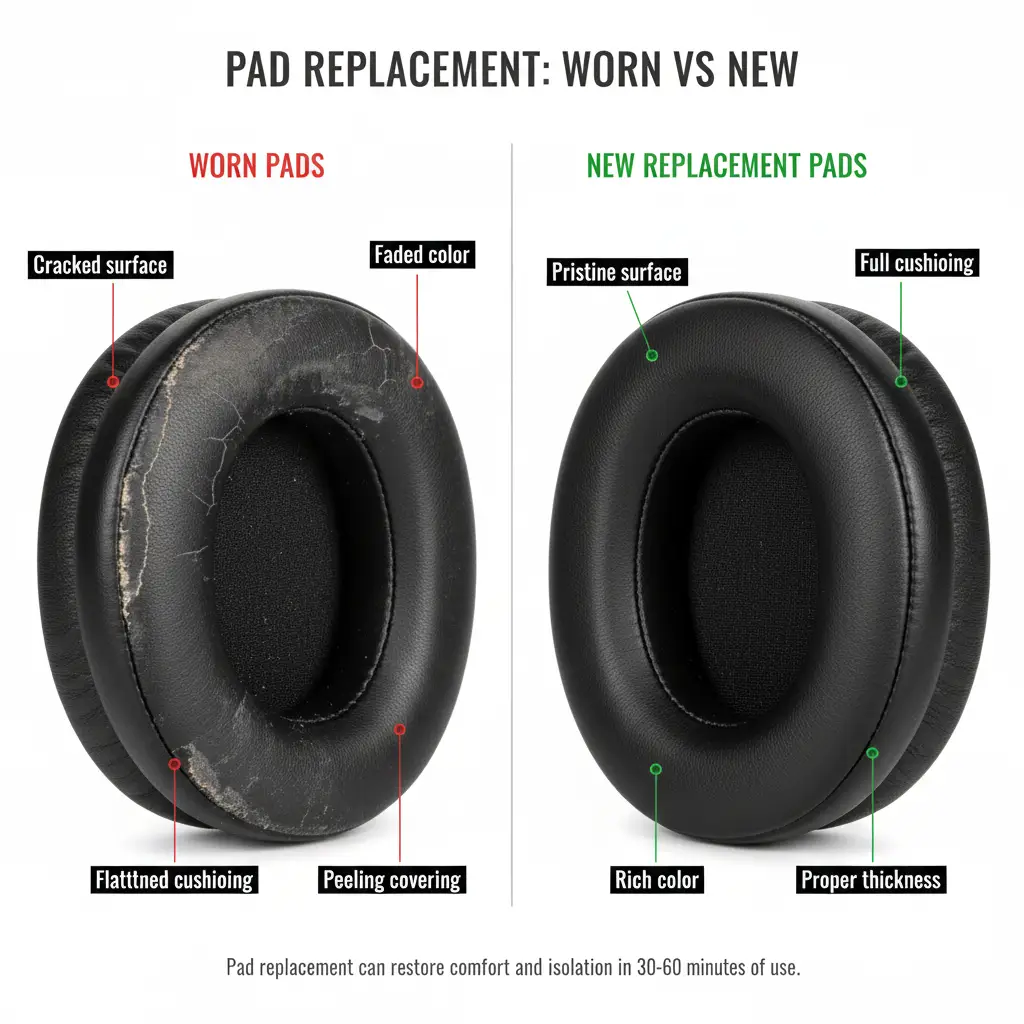
Quick reality check: If your on-ear headphones suddenly sound thinner or less bassy after months, the pads are often the reason, not your phone or music app.
Long-term value rule: On-ear headphones with easy pad replacement usually cost less over time, even if the upfront price is slightly higher.
Top on-ear headphones recommendations (decision cards)
The card format below is designed so you can decide fast. Each pick includes a comfort note and an alternatives line because on-ear headphones can be highly personal.
Pick: Beats Solo 4 (wireless on-ear headphones)
- Why it wins: portable form and easy day-to-day use for mainstream buyers.
- Why it is popular: it is a common “default” on-ear choice for people who want light carry and quick setup.
Comfort note: If the clamp feels tight in minute 5, do not ignore it. Run the 30-minute comfort test.
Alternatives: If price jumps, compare a comfort-first over-ear model or a lighter clip-on option.
Pick: JBL Live 460NC (wireless on-ear headphones with ANC)
- Why it wins: a practical feature set for the money and a good balance for daily use.
- Watch out for: on-ear ANC depends on seal; glasses gaps can reduce effectiveness.
Comfort note: prioritize pad softness over “stronger ANC” claims.
Alternatives: If you dislike pressure, switch categories to over-ear for travel.
Pick: JBL Tune 520BT (budget wireless on-ear headphones)
- Why it wins: value and convenience if you accept budget trade-offs.
- Watch out for: do not buy expecting a premium mic or premium ANC.
Comfort note: budget on ear headphones often have thinner pads, so plan breaks for longer sessions.
Alternatives: A wired pick can beat budget wireless for sound value.
Pick: Audio-Technica ATH-M60x (wired on-ear headphones)
- Why it wins: consistent wired performance without battery issues.
- Watch out for: isolation is still lower than many over ear closed designs.
Comfort note: pad replacement matters for long-term comfort.
Alternatives: If you want a broader wired shortlist, use the wired guide linked earlier.
Pick: Koss KSC75 (clip-on ear headphones)
- Why it wins: comfort-first and low pressure compared with many on ear headphones.
- Watch out for: leaks sound and does not block noise.
Comfort note: If you hate clamp, clip on ear headphones can be the safest experiment.
Alternatives: open-ear products exist, but they are not the same as on-ear headphones.
Budget brand sanity check (captures common searches without stuffing)
Many shoppers land here from marketplace queries like onn on ear headphones, jvc on ear headphones, or jlab studio on ear headphones. These can be fine, but your return policy and comfort test matter more than small spec differences.
- Check comfort first: budget on ear headphones often clamp harder or use thinner pads.
- Check pad replacement: if pads cannot be replaced, long-term value drops.
- Check mic expectations: “on ear headphones with mic” is common, but mic quality varies wildly in budget listings.
Buying tips – on ear headphones on Amazon and Black Friday traps
Searches like on-ear headphones amazon and on-ear headphones black friday usually mean one thing: you want a deal without buying the wrong model name. Deal pages often mix old and new variants that look the same.
Deal trap checklist (use this before checkout):
- Confirm the exact model name and letters (example: 520 vs 520BT).
- Prefer listings with easy returns so you can run the 30-minute comfort test.
- Avoid paying a premium for an older model if a newer version is similarly priced.
- If the deal is too good, confirm it is sold by a reputable seller, not a clone listing.
Music taste and fatigue note (why on-ear headphones can feel harsh)
On-ear headphones that clamp too hard can exaggerate treble perception and cause fatigue faster. If you listen to dense genres and you want less fatigue, prioritize comfort and gentle EQ support over maximum bass.
If you want genre-specific guidance on reducing fatigue and keeping guitars clear, see:
heavy metal headphones
FAQ (built to win PAA and AI answers)
What are on-ear headphones?
On-ear headphones sit on top of your outer ear instead of surrounding it. They are usually more portable than over ear headphones, but comfort depends heavily on clamp force and pads.
Are on-ear headphones good for glasses?
They can be, but only if the pads are soft and clamp is moderate. Glasses can create pressure hot spots and can also break the seal on on ear headphones, which changes bass and isolation.
Do on-ear headphones hurt more than over-ear?
Often yes for people sensitive to pressure, because on ear headphones press directly on the ear. Over ear headphones usually spread pressure around the ear instead of on it.
Are clip on ear headphones better for comfort?
Clip on ear headphones can be more comfortable if you hate clamp pressure. The trade-off is lower isolation and more sound leakage compared with closed on ear headphones.
Best on-ear headphones for calls?
Look for on ear headphones with a known strong mic and stable Bluetooth, not just “ANC”. Multipoint can also help if you switch between phone and laptop.
Are on-ear headphones good for the gym?
Usually earbuds are better for gym because sweat and movement can shift on ear headphones. If you use on ear headphones for gym, choose stable fit and breathable pads, and expect more heat.
How do I stop on ear pain?
First reposition the cups slightly and loosen the headband if possible. If pain remains, switch to softer pads (if available) or move to over ear headphones for longer sessions.
On ear vs over ear for commuting?
On ear headphones are easier to carry and can be fine if they seal well. Over ear headphones usually isolate better and feel more comfortable for long, noisy commutes.
Official and reputable references (for trust)
Update policy and changelog
Review cadence: Semi-annual update (and sooner if a pick is discontinued or the value changes heavily).
What changed in this update: Expanded comfort system for glasses and small heads, added pad replacement section, and added purchase-ready top recommendations table.
Next review: June 2026